
Archive for the ‘Relationships’ Category

Money or Relationship: Symptom or Cause?

January 28, 2012

We have all heard it before. When a relationship fails, it is often stated that money problems caused the failure.

In many cases this is true, one partner loses their job or runs up unknown debts, which leads to relationship disharmony and eventually breakup or divorce. But what if there were a little discussed, often avoided cause that preceded the symptoms and was in fact the “real” culprit?

We all know that if you address symptoms and do not fix the cause — the problem won’t be resolved and it will continue… often from one relationship to another. Kind of like a silent serial killer that lurks in the shadows undetected only to pounce at the most inopportune moment and wreak havoc.

After working one-on-one with thousands of couples from all walks of life, I have come to the conclusion that relationships are one of the most challenging areas of life for most people — and yet they have an enormous impact on ones quality of life. If you sit down with any couple it doesn’t take long to notice patterns of behavior that either add to or take away from the relationship.

Many money problems first manifested themselves in ones relationship dynamic (which includes all relationships — home, work, family etc.) which then shows up tangibly in the money dynamic. So if money problems are often (but not always) the symptoms and relationship disharmony the cause — then no amount of focusing on money and finances will solve the money problems.

You won’t succeed in keeping a leaky boat afloat if all you do is grab a bucket and bail out the incoming water! What is required for sustainable, long-term success is to first bail the water out, then plug the holes in the boat to prevent more water from coming in. Yes, this sounds logical and easy… and yet how often do people do the logical and reasonable thing when it comes to money?

So if your money dynamic isn’t flowing the way you would like, perhaps you could look to your relationship dynamic for some other causes of the problem? And at the end of the day, your relationships all reflect the most important relationship of all… the relationship you have with yourself.

© Goldzone Education. All rights reserved.

Productivity In A Masculine Feminine Partnership

April 17, 2009

The purpose of this article is to highlight one of the oldest and most pervasive dramas that exist between men and woman, and to provide a roadmap of what to do to get out of what we refer to as the “plot”.

When we talk of the plot, we are referring to the story or interrelated sequence of events that exists between two or more people. The nature of a plot is that it takes a minimum of two sides in order to exist. When one side decides to exit the plot and takes the necessary steps to do this – the plot can no longer exist. Therefore, if a plot is existing, then both sides are contributing to it.

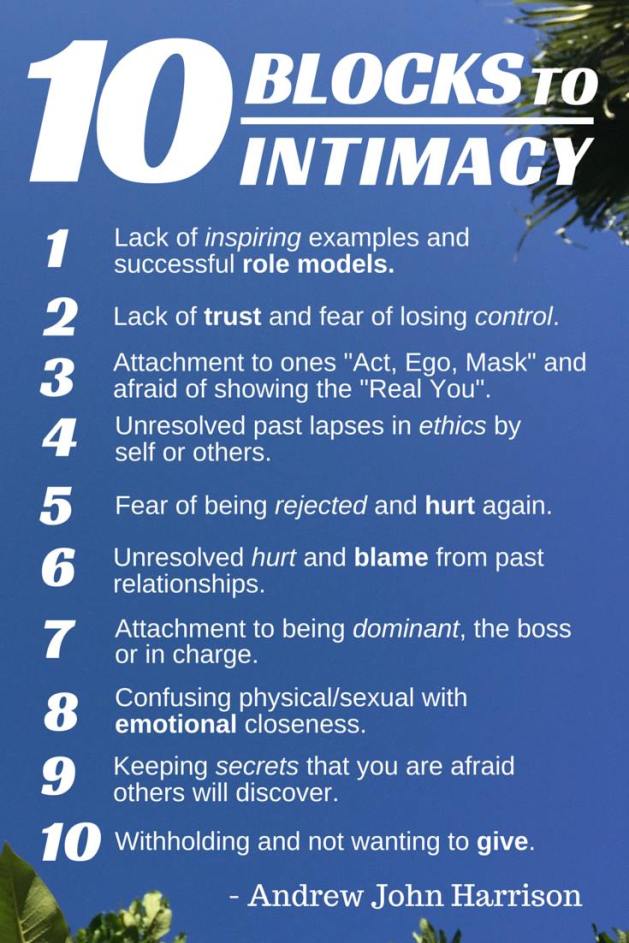
A relationship is often a complex web of plots that combine into a major theme. Therefore, if you can identify and resolve the major themes, you can experience a quantum leap in your results and level of intimacy.

In an ideal scene both partners would equally develop their masculine and feminine characteristics with one partner utilizing more masculine qualities and the other utilizing more feminine qualities in their expression with each other.

Problems occur in a partnership when one of the partners has not developed or embraced the characteristics of their gender. This forces their partner to compensate by taking on and expressing the opposite characteristics of their gender.

In other words if a man isn’t fully developed in his masculine role, then the woman in the partnership is forced to take on and act out the masculine traits that her partner isn’t owning. On the other hand, when a woman is over-expressing masculine characteristics, then the man is forced to become more effeminate and to under-express their masculine characteristics.

This can show up as a lack of male productivity – resulting in a lower than normal self-worth and a low income. For a man, his self-esteem is directly connected to his sense of productivity.

So if you want to disempower a man, make him feel unproductive. If you want to disempower a woman, make her feel ugly.

The basic masculine and feminine characteristics or qualities are as follows:

Masculine Qualities Feminine Qualities
  1. Achievement
  2. Acquisition
  3. Action
  4. Assertive
  5. Competitive
  6. Control
  7. Courage
  8. Dominance
  9. Drive
  10. Force
  11. Goal oriented
  12. Identity
  13. Intellectual
  14. Logic
  15. Motivation
  16. Productive
  17. Protection
  18. Reasoning
  19. Solution oriented
  20. Strength
  21. Systematic
  1. Accepting
  2. Attraction
  3. Beauty
  4. Caring
  5. Connection
  6. Cooperative
  7. Creativity
  8. Empathy
  9. Experiential
  10. Flexibility
  11. Inspiration
  12. Nurture
  13. Perceptive
  14. Receptive
  15. Retreat
  16. Sensitive
  17. Sensuality
  18. Softness
  19. Spontaneity
  20. Supportive
  21. Tenderness

To the extent that a person is missing or overdeveloped in any of these qualities, they will draw partners to themselves who play right into their plot!

So the first key to escape this scenario is to look at which of the masculine and feminine characteristics you have developed and are able to express – and which are underdeveloped and unexpressed in you.

The second key, is to look at which of the masculine and feminine characteristics your partner has developed and are able to express – and which are underdeveloped and unexpressed in them.

For example, if both partners are overly competitive – then you will have a partnership that is combative, argumentative and constantly challenging. The solution in this example is not for the man to win the competition, or to back down. This will only lead to a lack of productivity. The most effective solution would be for the woman to stop being competitive with the man, and to focus on supporting him to channel his competitive spirit into an appropriate expression that benefits the partnership.

This is not to say that the woman should not be competitive, or that the man should not be supportive of her competitive expression. What we are saying is that in the partnership, they should not compete with each other!

And finally, if a man is getting all his needs met, is productive, expressive and the woman is not getting her needs met, she will either shut down sexually, or become nagging and controlling. A healthy balance of masculine and feminine characteristics in both partners, with each partner expressing the characteristics of their gender – is the only way to develop and sustain a fulfilling, productive and rewarding partnership.

© Goldzone Education. All rights reserved.

How Will We Love?

April 7, 2009

Until One Is Committed

March 30, 2009

Many people have issues around commitment. This is probably because of the loss of freedom that goes along with committing to something, or someone.

Think about it. If you commit to something, what happens? Right after you make the commitment, everything that is the opposite comes up to challenge your commitment. If you commit to stop using profanities in public… the next time you are in public something will happen that will seduce you to want to use a profanity.

Then you think, “what does it matter anyway?” I will “just do it this one time”. And then before you know it your commitment is worthless and you find yourself back at square one.

This is why so many people have difficulty following through on their commitments. It is so easy to make the commitment when you are feeling good and are thinking about the theory of it, and another matter altogether to do it. The doing part takes emotional energy that was not needed when you first made the commitment. It is the emotional energy or the emotional aspect of the commitment that carries you through the difficult times as your commitment is challenged.

If you commit to something because you were threatened in the moment, then when you take the threat away – the commitment goes with it. If you get swept up in the emotion of a moment, and make a commitment – then when the momentary emotional drive is gone (for example in a meeting, or a company conference where everyone is excited about making a goal, objective or ideal happen) the commitment goes with it.

Spiritual Commitment

The best type of commitment and the most long-lasting are the ones that move you, so you emotionally commit. Then there is no going back. Your emotional energy in the positive direction of what the essence of the commitment is all about and the spiritual reason behind it – will have you unwavering. Typically a spiritual level commitment involves connecting with the higher purpose of the commitment. This usually involves the “greatest good for the greatest number of people“.

Overcommitment

If you commit to too many things without taking the time to emotionally and spiritually commit to seeing them through, then you will end up overestimating what you can reasonably achieve and will make more commitments than you can keep.

Good As Gold

The key is to “make your word as good as gold” which means that you make small commitments – and keep them – before committing to huge, big and overwhelming commitments. By making and keeping small commitments you build trust with yourself. And others will also trust you more.

And this trust, is the essence of building lasting relationships and is the key to success as a leader.

***

Below is a quote from a book by William H. Murray. Its an old one but relevant to this subject:

Until One Is Committed

William H. Murray (from his book “The Scottish Himalayan Expedition”)

Until one is committed, there is hesitancy, the chance to draw back, always ineffectiveness. Concerning all acts of initiative (and creation) there is one elementary truth, the ignorance of which kills countless ideas and splendid plans: that the moment one definitely commits oneself, then Providence moves too. All sorts of things occur to help one that would never otherwise have occurred. A whole stream of events issues from the decision, raising in one’s favor all manner of unforeseen incidents and meetings and material assistance, which no man could have dreamed would have come his way.

I have learned a deep respect for one of Goethe’s couplets:

“Whatever you can do, or dream you can, begin it. Boldness has genius, power, and magic in it”.

© Goldzone Education. All rights reserved.

Confront And The Financial Crisis

March 3, 2009

With the financial crisis deepening, many of our worst fears are being realized.  With the Waves of Impact continuing to wash over us, we are being confronted by financial losses on a never-before-seen scale. Entire industries are at risk of being wiped out. Previously invulnerable mega-corporations are being brought to their knees. Hidden weaknesses are being exposed.

As individuals we are being faced with the complete loss or at least dramatic reduction in the value of our retirement accounts. It can feel like we are being confronted on all sides. How do we cope with the uncertainty?

Now is an excellent time to consider the meaning of the word CONFRONT. Most people don’t think about their ability to confront and what can be done to confront difficult situations more easily, with less stress and more effectively.

Here is the definition of Confront:

CONFRONT: n. 1. An action of being able to face without flinching or avoiding. 2. The ability to be there comfortably and perceive.

So confront means to be able to see what is there, comfortably without flinching, wanting to withdraw or running away. Often, to fully understand a word, it is easier to look at the opposite. What does “non-confront” mean? It simply means the inability to see what is there. An inability to face something. Why can’t we confront something? Because to confront means PAIN. It is too painful to view so we withdraw and refuse to look at the area.

Notice that the definition describes confront as an ability? It isn’t something you do, it is an ability that we develop over time. The ability to see more and more of the truth.

There is also what is called “low-confront” which is where a person can confront a little, can see a little of the truth of what is there… But not all of it.

How do you improve your ability to confront? The same way you improve any other ability, focus, attention and practice. And, dealing with the pain that had you not confronting the area in the first place.

As you can see, the ability to confront is directly connected to the ability to handle change. If a person can’t confront the future, or the unknown… Then they will stay in their comfort zone, and remain stuck in the past.

© Goldzone Foundation. All rights reserved.

Cheating

February 9, 2009

Statistics show that at least 50% of men and 33% of woman cheat at least once. Jealousy is the leading cause of battery and violence in relationships…

Your Primary Relationship sets the Tone

January 25, 2009

Your primary relationship influences and often sets the tone for all other relationships in life… at work, partners, friends, clients etc. IT ALSO DETERMINES HOW SUCCESSFUL YOU ARE FINANCIALLY. Most people don’t realize that the quality of their relationships = the quality of their lives. There is a direct correlation between a person’s level of happiness, success, financial prosperity, overall wellbeing and their primary relationship…

Facial Expression

January 23, 2009

 Facial expressions show true feelings. Contempt is a killer of relationships.


Follow

Get every new post delivered to your Inbox.