Renaissance for Leaders

Exploring leadership & human performance

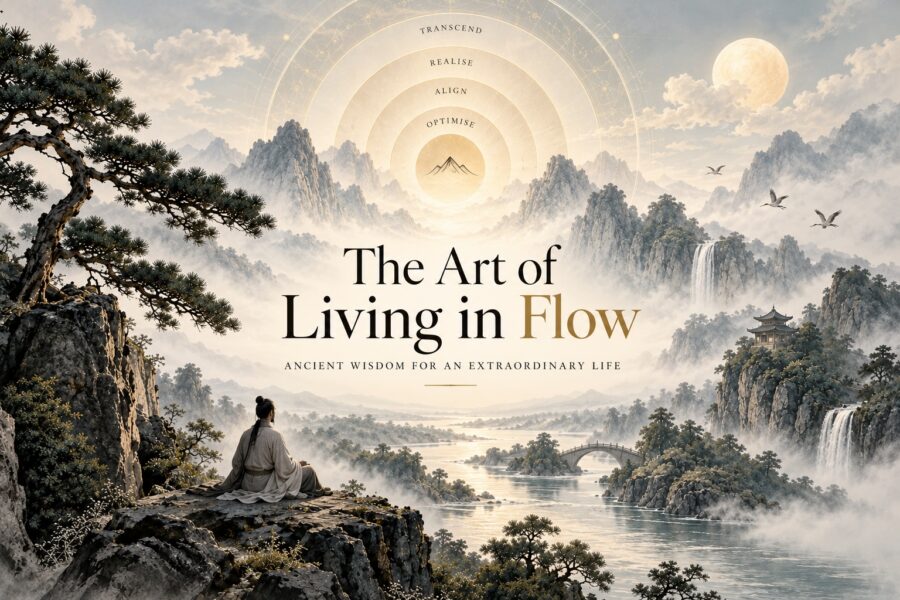
The Art of Living in Flow

Tao Te Ching: The Book of The Way

Ancient Wisdom for an Extraordinary Life

For thousands of years, human beings have been trying to figure out how to live a good life. How to become successful, avoid suffering, find happiness, build meaningful relationships, and make sense of a world that doesn’t always cooperate with our plans.

We’ve developed religions, philosophies, sciences, governments, and entire industries dedicated to answering these questions. And yet, despite all our accumulated knowledge, many people spend their lives struggling against the very nature of life itself.

More than 2,000 years ago, an ancient Chinese text offered a radically different approach.

The Tao Te Ching, traditionally attributed to Lao Tzu, is one of the great works of human wisdom. Its 81 short chapters explore the nature of reality, the relationship between opposites, the art of leadership, and what it means to live in harmony with the universe.

What makes it extraordinary is that so much of its wisdom runs directly counter to what we have been taught about success, achievement, power, and control.

And perhaps that’s why it remains so relevant today.
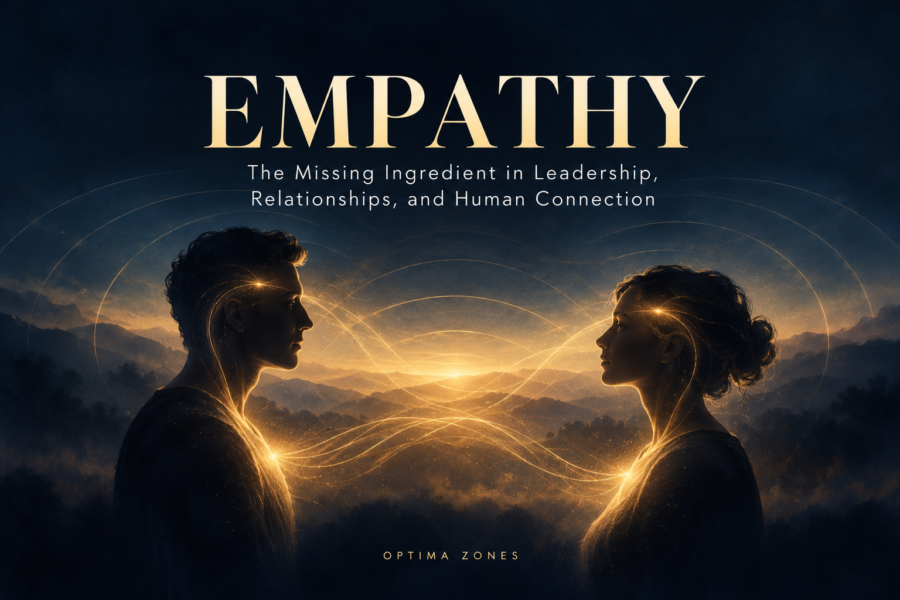
Empathy: The Missing Ingredient in Leadership Relationships and Human Connection

A Deep Dive by Andrew John Harrison

Why understanding another person involves far more than seeing things from their point of view.

Most people think they understand empathy.

Ask them what it means, and they will tell you it is putting yourself in another person’s shoes, understanding how they feel, or seeing things from their perspective.

All reasonable answers.

But I think they barely scratch the surface of something that has an enormous influence on virtually every aspect of our lives.

Consider how many problems in relationships, organizations, businesses, and even between nations come down to people not understanding each other. We argue, defend our positions, compete, blame, take offense, and sometimes go to extraordinary lengths to prove that we are right. We complain that other people do not listen, do not care, or do not understand what we are going through.

Yet how often do we stop to consider whether we genuinely understand them?

What Makes You Exceptional? Two Questions Tesla Uses to Find Winners

I recently came across two questions reportedly used in recruiting at Tesla. They are deceptively simple, and I think they reveal something fundamental about what separates exceptional people from everyone else.

The first question:

“Describe your resume, and talk about the intentionality of your career.”

In other words, did things happen to you, or did you go after things?

The second question:

“What makes you exceptional? Give us an example of exceptional ability.”

The idea was to find people who could win under extraordinarily difficult circumstances. People who, when the odds were against them, found a way to get across the finish line.

The thinking was simple. Fill a company with people who know how to win, and you increase the likelihood of building a winning company.

I like these questions.

What interests me most is that neither question is really about qualifications, education, experience, or technical expertise.

Both questions reveal how a person operates.

And that’s far more interesting.

The Magic Freedom Formula: How to Stop Giving Other People the Remote Control to Your Life

There is a strange thing that happens when someone hurts, annoys, disappoints, ignores, betrays, criticizes or otherwise inconveniences us. We become convinced that they have made us feel the way we feel.

“He made me angry.”

“She made me feel rejected.”

“My team makes me so stressed.”

Of course, people do things that are hurtful, stupid, selfish, insensitive and, occasionally, spectacularly unhelpful. Let us not pretend otherwise. The Magic Freedom Formula is not an invitation to become a doormat with excellent emotional vocabulary.

But here is the uncomfortable part: another person’s behavior may be the trigger, yet it is rarely the original cause of the feeling that takes over your day, your relationship, your meeting, or your nervous system. When we confuse the two, we hand that person the remote control to our life. Then we call it love, leadership, loyalty, justice, standards, or “just being honest.”

That is a lot of pressure to put on a remote control.

The Ownership Cycle

10 Keys to Powerful Communication

Lessons from 30 years in business.

I started my first business in 1994. I was young, inexperienced, and had no idea just how dramatic the roller coaster of business would be. What I lacked in experience, I made up for with hard work, enthusiasm, grit, and determination. My partners certainly had their hands full because I was also stubborn… perhaps a little hardheaded.

Despite my lack of experience, the business expanded rapidly. In our first eight months we generated $4.6 million in revenue (in 2026 dollars). We were hiring salespeople quickly and building systems almost as fast as we could design them.

As our team grew, we began to notice something important. Talent alone was not enough. Intelligence was not enough. Even enthusiasm was not enough.

The Art of Havingness: Expanding Your Capacity to Receive

A few years ago, I worked with a highly successful CEO. On paper, he had everything… wealth, recognition, family, freedom. Yet in conversation he admitted, “I just can’t enjoy it. I feel guilty when I buy things for myself. I push away compliments. Even when opportunities come my way, I find reasons to say no.”

It wasn’t that he didn’t have things. He couldn’t let himself have them.

This is the hidden barrier many of us face. We say we want love, money, peace, freedom, or recognition. But when it actually shows up… we resist. We downplay the compliment. We reject the gift. We self-sabotage the opportunity.

That invisible force has a name: Havingness.

Netflix Culture: Freedom & Responsibility

(tap the screen to change slides)

Here’s the full text from the Slides:


We Seek Excellence

Our culture focuses on helping us achieve excellence.

Seven Aspects of Our Culture

  • Values are what we value
  • High performance
  • Freedom & responsibility
  • Context, not control
  • Highly aligned, loosely coupled
  • Pay top of market
  • Promotions & development

The Changing World Order

This video by Ray Dalio is based on the book: The Changing World Order.

Beyond Entrepreneurship Summary

BUILD A BUSINESS THAT LASTS

Since 1992, Jim Collins’ work has guided our development of the Goldzone Organization and OPTIMA Zones.

Save time by reading the best parts in under 10 minutes…

We just released a new summary of Jim Collins and Bill Lazier’s timeless classic:

Beyond Entrepreneurship: Turning Your Business into an Enduring Great Company.

• What makes companies endure
• Why Reed Hastings (Netflix) memorized the first 86 pages
• How we evolved Level 5 Leadership into our own Level 7 Leadership model
• Practical takeaways you can apply immediately to grow your business

This is required reading for any founder of a high-growth business.

⚜️

Page 1 of 57

Powered by Goldzone & Site by Orozon

0