Have you ever made a mistake, then a split-second later felt the sting of dread, shame, and disapproval followed by a critical inner voice that judges and finds fault with what you have done?
Both the feeling and the voice are manifestations of what is known as your “Inner-Critic.” This article explores what is an Inner-Critic, how it works, where it came from and how to free oneself once and for all of this sabotaging mechanism.
Let’s explore the definition in more detail:
INNER:
- Situated inside, further in or internal.
- Spiritual, mental or emotional.
- Private and not expressed or discernible.
CRITIC:
- A person who disapproves and expresses their unfavorable view of something.
- A person who judges and evaluates or analyzes literary or artistic works, dramatic or musical performances.
- A person who tends too readily to make trivial, or harsh judgments; faultfinder.
INNER-CRITIC:
- Internal, private voice that disapproves, judges, evaluates and finds fault saying that he or she is bad, wrong, inadequate, worthless, guilty and not good enough.
If you are like most people, your feelings about criticism range from mild dislike, strong dislike to outright hatred for the criticism and the person giving it.
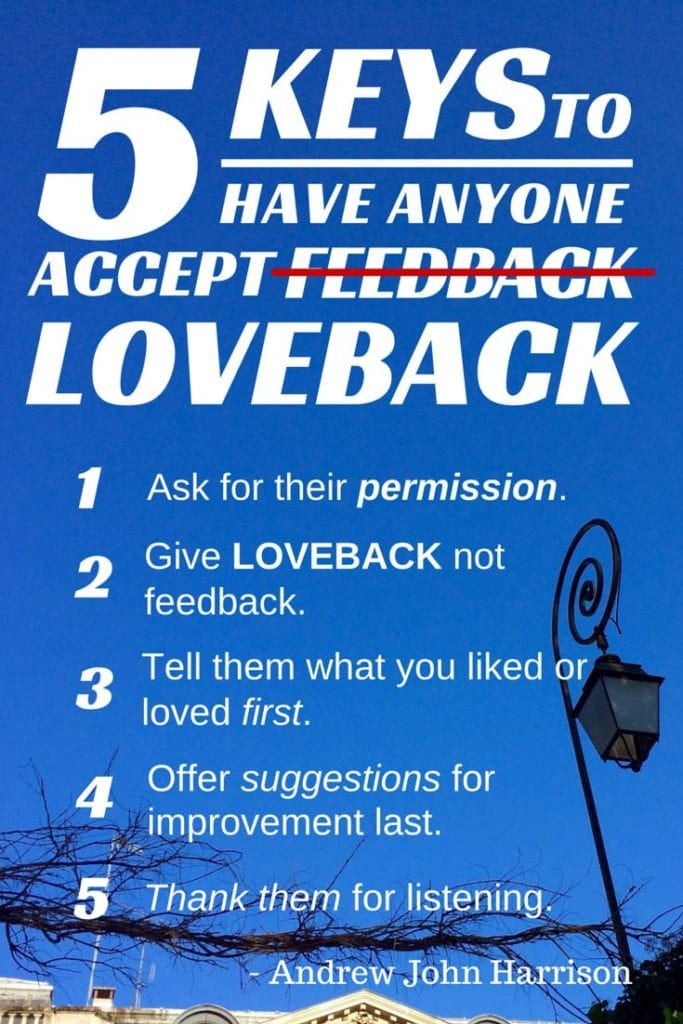
There are two main types of criticism: constructive and destructive. The difference between the two comes down to the intention of the critic. If the critic intends to improve something and delivers their criticism with this in mind, then the criticism is often (not always) received differently than when the intention of the critic is to minimize, tear down or destroy.
Criticism is also known as feedback.
The problem for most people is that they have experienced so much destructive criticism that they can’t tell the difference between the two types. So, they end up reacting to all criticism/feedback and writing it off automatically.
All successful people, public figures, and leaders are subject to both types of criticism. Learning to differentiate between the two types, and allowing oneself to benefit from the criticism/feedback – without taking it personally – is an art and skill developed over time.
More insidious and destructive than any critic you may encounter at work or at home is the one you take with you on a permanent basis: the one inside your head that is known as the “INNER CRITIC”.
The Inner Critic is that part of yourself that criticizes everything you do, doubts what you do, doesn’t think you are good enough, gives you negative thoughts, is cynical, is never satisfied, and is a perfectionist.
Another term for the Inner Critic is the Inner Villain that plays a destructive game with yourself. Once you have disengaged from dramas with other people, you then have the task of disengaging from your own Villain that is making you a Victim to yourself.
As long as you are busy blaming other people for your feelings and circumstances, your Inner Critic remains invisible to you. So it stands to reason that when you cease blaming others, you will then become aware of your own self-blame, and inner criticism. It is your inner criticism that has you blaming others in the first place.
If you are sensitive to others blaming or criticizing you, then you have a well-developed Inner Critic. It is the Inner Critic that cares what others think about you. It is the Inner Critic that has you feeling hurt by what others say or do.
Once you have dealt with your Inner Critic, you will be less at the effect of other people, and more at cause over all areas of your life.
If you have a fear of rejection, this is a fear born directly from the essence of your Inner Critic.
Technically, the Inner Critic is your shadow self that is you rejecting you. It is found in the depths of your subconscious mind. The opposite of your Inner Critic is self-acceptance, which is called your Inner Cheerleader.
When your Inner Critic is beating you up for a mistake you made, you become unsavory to other people. They feel that you are negative and perhaps toxic, and therefore will be inclined to reject you. Your Inner Critic seduces the worst behavior from people, as it only leaves space for a harmful act or nasty comment. You might as well have a sign on your forehead that says, “Beat me up, reject me.”
It takes a very clear person to see this and not reject you or beat you up. This takes a lot of energy and isn’t fun. So you are no fun to be around (and you can’t stand yourself either.)
So now that we know what the Inner Critic is, how do we deal with it? How do we disengage from it?
The Inner Critic never goes away totally. It always remains in the background… always, and ever listening. So we can disengage from it but never get rid of it totally.
How do you Disengage your Inner Critic?
Well, the first step is to become consciously aware of when your Inner Critic is at play. Once you are aware of it, your task is to accept your Inner Critic. Once you have fully accepted your Inner Critic, you can then accept yourself.
Self-acceptance is the key.
Because two things cannot occupy the same space, the antidote to the Inner Critic is the Inner Cheerleader. So, when you hear negative self-talk from the inner critic, thank it for sharing and counter with positive encouragement from your Inner Cheerleader.
If you are with another person, friend or colleague and you notice your Inner Critic is running you, and you are unable to disengage it, then the best thing to do is take time out until you have it under control. This is responsible behavior and puts you more AT CA– USE.
The ultimate solution to the Inner Critic is to clean slate the area. This means clearing the areas that created your Inner Critic in the first place. Namely, the things that you have done to others, and things others have done to you.
There is no quick fix to this. It is an ongoing journey that you take with yourself.