
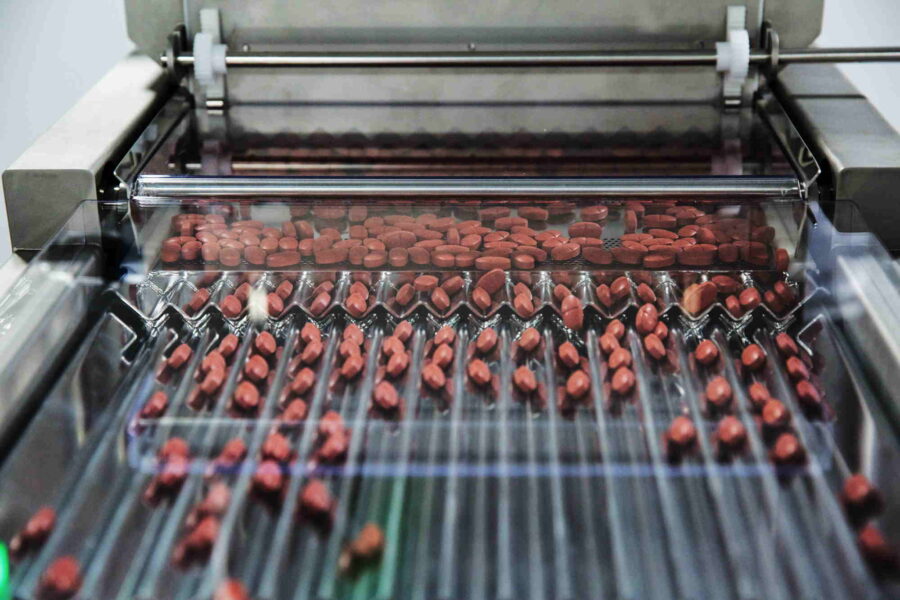
Global health regulators are looking into whether widely used diabetes drugs may contain unsafe levels of a carcinogen that has previously been found in heart and gastric medications.
The FDA has begun testing samples of the diabetes drug metformin for the carcinogen N-Nitrosodimethylamine (NDMA), the agency announced Wednesday. Contamination with this same substance led to recalls of blood pressure and heartburn medications within the last 2 years.
Metformin is generally the first medication prescribed for type 2 diabetes, according to Mayo Clinic. It lowers glucose production in the liver and boosts your body’s sensitivity to insulin so that your body uses insulin more effectively. More than 30 million people in the U.S. have diabetes, and 90 to 95% are type 2, the CDC says, and metformin is the fourth-most prescribed drug in the United States.
The FDA’s announcement comes on the heels of a recall of three versions of metformin in Singapore and the European Medicines Agency’s request that manufacturers test for NDMA, according to Bloomberg News.
Singapore health officials recalled three of 46 versions of metformin marketed there after finding NDMA amounts “above the acceptable level.” The recalled drugs had been sold locally for only a short time, and the risk to patients who had taken them is low, Singapore’s Health Sciences Authority said in a statement.
“The agency is in the beginning stages of testing metformin; however, the agency has not confirmed if NDMA in metformin is above the acceptable daily intake (ADI) limit of 96 nanograms in the US,” FDA spokesman Jeremy Kahn says in an emailed statement. “A person taking a drug that contains NDMA at or below the ADI every day for 70 years is not expected to have an increased risk of cancer.”
Valisure, an American online pharmacy that tests every batch of drugs it sells before dispensing them, has rejected 60% of its metformin since it started testing for NDMA in March.
“The public definitely should be concerned about the rapidly growing discovery of carcinogens in medications, especially in those that are taken on a daily basis where even small contaminations can add up over time,” says David Light, CEO of Valisure.
While the FDA investigates, officials urge patients who are taking metformin to continue. “This is a serious condition, and patients should not stop taking their metformin without first talking to their health care professionals,” the statement says.
A study conducted by Stanford University in California researchers reveals that common foods can cause blood sugar spikes in otherwise healthy people. Paying closer attention to these spikes could prevent diabetes and some of its complications.
Over the course of a day, blood sugar levels may spike to diabetic and prediabetic levels, even in healthy individuals.
Diabetes affects over 30 million people in the United States, which is almost 10 percent of the population. An additional 84 million people have prediabetes.
Abnormal blood sugar levels are a hallmark of this metabolic disease. To measure these levels, physicians use two main methods: they either take fasting blood sugar samples, which informs them of the level of sugar in the blood at that specific point; or they measure levels of glycated hemoglobin (HbA1C).
The glycated hemoglobin test is routinely used to diagnose diabetes, and it relies on the average levels of blood sugar over a period of 3 months.
Despite their widespread use, neither of these methods can say anything about the fluctuations in blood sugar that happen over the course of a day.
So, researchers led by Michael Snyder, who is a professor of genetics at Stanford, set out to monitor these daily fluctuations in otherwise healthy individuals.
They looked at the patterns of blood sugar change after a meal and examined how these patterns vary between different people who have had the same meal.
Prof. Snyder and colleagues published the results of their research in the journal PLOS Biology.
Three types of blood sugar variability
For their study, the researchers recruited 57 adults aged 51 years, on average, who had not been diagnosed with diabetes.
Prof. Snyder and team used novel devices called continuous glucose monitors to assess the blood sugar of the participants in their normal environment. Also, the researchers evaluated the participants’ whole-body insulin resistance and insulin secretion.
The blood sugar and metabolic measurements allowed the researchers to group the participants into three different “glucotypes,” based on the patterns of blood sugar variability.
People whose blood sugar did not vary much were grouped under “low variability;” those whose blood sugar was found to spike quite often were grouped under “severe variability;” and finally, people who fell in between were classified as the “moderate” glucotype.
The findings revealed that “glucose dysregulation, as characterized by [continuous glucose monitoring], is more prevalent and heterogeneous than previously thought and can affect individuals considered normoglycemic by standard measures.”
Glucose often in prediabetic, diabetic range
Next, the researchers wanted to see how people of different glucotypes reacted to the same meal. So, they offered all the participants three types of standard breakfasts: cornflakes with milk, bread with peanut butter, and a protein bar.
Each participant responded uniquely to these breakfasts, which suggests that different people metabolize the same food in different ways.
Additionally, the study revealed that common foods such as corn flakes caused significant blood sugar spikes in most people.
“We were very surprised to see blood sugar in the prediabetic and diabetic range in these people so frequently […] The idea is to try to find out what makes someone a ‘spiker’ and be able to give them actionable advice to shift them into the low glucotype.”
Prof. Michael Snyder
“Our next study will delve into the physiological causes of glucose dysregulation,” continues the senior investigator. “These include not only genetic variation, but also microbiome composition, and pancreas, liver, and digestive organ functions.”
The researchers hope that their recent and future findings will help to prevent diabetes and its complications.
By 2025, a lot more people will be tracking their blood sugar, predicts doctor — here’s why
CNBC > Published Fri, Feb 1 2019 8:00 AM EST Updated Thu, Feb 7 2019 4:42 PM EST Aaron Neinstein, MD
Key Points
In the future, one doctor suggests that a lot more people without diabetes will dabble in tracking their blood sugar.
The technology is becoming cheaper and more accessible than ever before, and it will likely get smarter thanks to collaborations between between the device companies and tech companies like Alphabet or Apple.
Providing consumers with that kind of feedback about their health is powerful.
Getty Images
Aaron Neinstein, MD, is Assistant Professor of Medicine at the University of California, San Francisco, and Director of Clinical Informatics at the UCSF Center for Digital Health Innovation. He’s also a practicing endocrinologist.
Let’s start with a prediction: By 2025, everyone with diabetes will be tracking their blood sugar with devices called continuous glucose monitors, and it will be common for many people without diabetes to dabble in tracking, too.
This may sound like a bold statement coming from an endocrinologist (we’re the specialists who manage diabetes), but hear me out. In my practice, I primarily treat people with diabetes, and over the years, technology to help manage the disease has made remarkable strides.
People with diabetes now have alternatives to pricking their fingers with a sharp needle to measure their blood glucose level multiple times per day. Early continuous glucose monitoring systems — the first was released in 1999 by the medical device maker Medtronic — while helpful in some cases, were not widely used because they were painful to insert, bulky, inaccurate, very expensive and still required many calibrations every day with fingersticks.
The technology has improved dramatically. Two of the newest devices, the Dexcom G6 and Abbott Freestyle Libre , no longer require fingerstick calibrations, are FDA-approved for people to make insulin-dosing decisions, and are much easier to insert.
Anybody who has ever done a fingerstick blood glucose knows that it hurts. Inserting a device instead is much less painful than a fingerstick, and the needlestick happens much less frequently. Both devices transmit glucose levels to a smartphone, either wirelessly and continuously, or with a wave of a smartphone over the sensor. Accordingly, continuous glucose monitoring (CGM) use has increased in Americans with type 1 diabetes, from 6 percent in 2011 to 38 percent in 2018. I expect these technologies to continue to get even better — they will get smaller, more accurate, and even smarter as better algorithms are developed and collaborations from between the device companies and tech companies like Alphabet or Apple.
This is a positive trend. For the approximately 1.5 million Americans with type 1 diabetes, CGM has moved far beyond novelty and should represent standard of care.
But, I believe CGM has much larger potential. That includes people with type 2 diabetes (approximately 30 million American adults), the even larger group with pre-diabetes (approximately 81 million American adults), and potentially almost anybody.
Feedback is powerful
I recently saw a 70-year-old patient with type 2 diabetes and heart disease who takes a medication known as metformin to manage his condition, but he has resisted making any changes to his diet. When he saw his own data from a glucose monitor, with no explanation even needed from me, he immediately identified the daily morning spike in his blood glucose level, and also its source: His daily glass of orange juice and banana.
If he had instead done a fingerprick, he wouldn’t have been aware of these large glucose spikes.
(I shared the data with his permission).
Data that shows blood sugar spikesAaron Neinstein
The patient then cut these items from his diet and reported an immediate improvement in his blood sugar levels.
Another patient case is a 37-year-old man without diabetes. He noticed, by wearing a continuous glucose monitor for a while, that a particular soup from a particular hospital cafe caused a surprisingly sustained elevation in glucose.
I can report that this person has taken this feedback seriously, because this person is… well me. Do I have diabetes? No. But I decided to wear the device to both to help me understand the experiences of my patients (which I embarrassingly chronicled here in 2012), and because I have a history of borderline high cholesterol. Between my cholesterol levels and these data, I decided that my metabolism and insulin resistance levels were likely putting me at higher risk for heart disease, so I immediately made substantial changes in my diet.
Looking at blood sugar trends with a continuous glucose monitor.Aaron Neinstein
These two examples show how immediate feedback is powerful. And this applies even for people who do not have diabetes but may have risk factors for diabetes, such as being overweight, or having a family history of the disease.
There is no proven benefit to everyone using a continuous blood sugar tracker all the time — but, I think we will soon discover that many people can benefit from using it at least for a short period. As in the examples above, people can quickly gain valuable insights on the health impacts of lifestyle choices, including food, stress levels, sleep amounts, and activity levels.
So what do we need next?
We need more scientific studies to prove that monitoring blood glucose levels will help people who haven’t been diagnosed with diabetes to be healthier or live longer. But I expect that the value of using a device to measure it will continue to increase, as our ability to interpret and act on the data improves. In my practice, I have found my patients love being able to do a video visit or email with me about their blood sugar data, and learn from reviewing the data together. We need many more tools that help doctors guide patients to more easily use and interpret that data towards adjusting medications or habits.
Costs will also have to continue to fall for the technology to become ubiquitous. The cheapest option, the Abbott FreeStyle Libre, has arranged deals with most insurance plans to provide two sensors (lasting two weeks each) for $75, but this price will still be out of reach for many people.
Finally, our understanding of diabetes itself will change. A group of researchers at Stanford recently found found that when people without known diabetes put on a continuous glucose monitor and ate different types of meals, the ways their bodies responded varied widely — something they called “glucotypes.” This mirrors my own findings when I wore the device.
Soon, rather than speaking about the two commonly defined categories of diabetes — type 1 or type 2 — there will be dozens of smaller categories representing people who have different genetic profiles, physiological patterns (including those “glucotypes”), and even different behavioral types. We will find that there are no neat categories of people who have diabetes or don’t have diabetes, but rather a continuum of risk. Rather than giving everyone the same pill, or same insulin dose, we will find that each of these different patterns benefit from unique combinations of pills and different behavioral and lifestyle therapies. We will need artificial intelligence to help us determine these different patterns, what they mean, and what we should do with them.
The next five years will be an incredible time, as fingersticks disappear from diabetes, prices fall and the increasing ubiquity of blood sugar tracking opens new opportunities to understand, avoid, or treat disease.
Have you struggled with losing weight? The conventional thought is that to lose weight, you need to eat less, and exercise more. This has lead to the false idea that overweight people are lazy and just need more discipline.
In a laboratory, all calories burn the same. However, in the human body, not all calories are metabolized the same due to the most underrated aspect of human health: HORMONES. For example, when insulin levels are high, your body will store fat and not burn it. When insulin levels are low, the body can utilize it’s abundant reserves of fat!
If you want to lose weight, lower your insulin levels!
Resting metabolic rate (also called RMR) is the rate at which your body burns energy when it is at complete rest. You can calculate your resting metabolic rate to see how many calories your body needs to perform basic functions like breathing and circulation. Your RMR or resting metabolic rate is part of your total daily energy expenditure (TDEE) or the total number of calories you burn each day.
Verses from the Devyapadhakshamapanastotram, by Adi Shankaracharya
These are five out of the eight verses of “A Prayer To Beg Forgiveness From the Goddess,” written by Adi Shankaracharya, one of the greatest yogis ever and a true realized being.
The story behind the prayer is that Shankaracharya was traveling through the Himalayas on his way to a debate. In those days Shankaracharya was a believer in Non-Dualism, the doctrine of Absolute Monism. He did not believe in the reality of the Divine Mother (Shakti) and Her Creation which, according to his philosophy, was all Maya (illusion).
The medical profession is regularly confronting issues relating to addiction, metabolic syndrome, diabetes, and obesity in their day-to-day practice. It is interesting to observe what doctors think of these issues.
With this in mind, Credit Suisse Research conducted a proprietary survey of 152 doctors in the USA, Europe and Asia. The results are startling.
While most doctors do not appear to have much specialized knowledge or training about nutrition (and more specifically sugar or HFCS), 82% of the doctors in the USA and Europe think that sugar calories are handled differently by the body, compared to only 60% in Asia.
On the question “is sugar addictive,” 65% think this is the case. There is more: 98% of the doctors in the USA think that increased sugar consumption is linked to the development of obesity, compared to 85% in Europe and 94% in Asia. The same question regarding diabetes type II shows that 96% of the doctors surveyed in the USA believe there is a link with increased sugar consumption versus 92% in Europe and 86% in Asia.
It gets even better. When doctors were asked about the extent of training on nutrition they received in medical school, almost 60% worldwide had minimal to none!
Eating fat can make you fat, right? The Credit Suisse Research Institute recently synthesized a significant body of evidence that suggests just the opposite – that certain fats are actually good for us. But if fat isn’t the reason for the rise in obesity and metabolic syndrome – a constellation of factors that increase the risk of heart disease, stroke, and diabetes – what is? And which kinds of fats are the healthiest? Watch the video to find what the scientific data really says about fat consumption.
90-year-old John Carter, still hikes, bikes, swims and plays sports. It’s rare to see a 90 something doing any kind of physical activity. After a swan dive from the 10-foot dive board, he jokes that no other 90-year-olds are well enough to join him.