


Man’s Search for Meaning is one of the all-time great books on life meaning and purpose by Viktor Frankl. First published in 1946, Frankl chronicles his experiences as a prisoner in Nazi concentration camps during World War II.
When faced with unimaginable suffering, there are four differing approaches one could take; 1) to give up and resign oneself to fate 2) turn to religion 3) spiritualize the circumstances 4) find practical purpose and meaning in life, then immersively imagine a positive outcome.




Most of us know that we can reduce our risk of disease by eating a healthy diet, getting enough exercise, and not smoking. But, did you know that your family history might be one of the strongest influences on your risk of developing heart disease, stroke, diabetes, or cancer? Even though you cannot change your genetic makeup, knowing your family history can help you reduce your risk of developing health problems.
Family members share their genes, as well as their environment, lifestyles, and habits. Everyone can recognize traits such as curly hair, dimples, leanness, or athletic ability that run in their families. Risks for diseases such as asthma, diabetes, cancer, and heart disease also run in families. Everyone’s family history of disease is different. The key features of a family history that may increase risk are:
- Diseases that occur at an earlier age than expected (10 to 20 years before most people get the disease)
- Disease in more than one close relative
- Disease that does not usually affect a certain gender (for example, breast cancer in a male)
- Certain combinations of diseases within a family (for example, breast and ovarian cancer, or heart disease and diabetes)
If your family has one or more of these features, your family history may hold important clues about your risk for disease. People with a family history of disease may have the most to gain from lifestyle changes and screening tests. You cannot change your genes, but you can change unhealthy behaviors such as smoking, inactivity, and poor eating habits. In many cases, adopting a healthier lifestyle can reduce your risk for diseases that run in your family. Screening tests (such as mammograms and colorectal cancer screening) can detect diseases like cancer at an early stage, when they are most treatable. Screening tests can also detect disease risk factors like high cholesterol and high blood pressure, which can be treated to reduce the chances of getting a disease.
Learning About Your Family History
To learn about your family history:
- Ask questions
- Talk at family gatherings
- Look at death certificates and family medical records, if possible
Collect information about your grandparents, parents, aunts, uncles, nieces, nephews, siblings, and children. The type of information to collect includes:
- Major medical conditions and causes of death
- Age of disease onset and age at death
- Ethnic background
Write down the information and share it with your doctor. Your doctor will:
- Assess your disease risk based on your family history and other risk factors
- Recommend lifestyle changes to help prevent disease
- Prescribe screening tests to detect disease early
If your doctor notices a pattern of disease in your family, it may be a sign of an inherited form of disease that is passed on from generation to generation. Your doctor may refer you to a specialist who can help determine if you have an inherited form of disease. Genetic testing may also help determine if you or your family members are at risk. Even with inherited forms of disease, steps can be taken to reduce your risk.
What If You Don’t Uncover a Family History of Disease?
Being aware of your family health history is an important part of a lifelong wellness plan. Even if you don’t have a history of a particular health problem in your family, you could still be at risk. This is because:
- Your lifestyle, personal medical history, and other factors influence your chances of getting a disease
- You may be unaware of disease in some family members
- You could have family members who died young, before they had a chance to develop chronic conditions such as heart disease, stroke, diabetes, or cancer
Resources & References
Understanding Genetics: A New York, Mid-Atlantic Guide for Patients and Health Professionals > View or Download the .PDF
- Understanding Genetics: A New York, Mid-Atlantic Guide for Patients and Health Professionals. https://www.ncbi.nlm.nih.gov/books/NBK115560/
- Centers for Disease Control and Prevention. Family history is important for health. www.cdc.gov/genomics/public/famhix/fs.htm.
- Centers for Disease Control and Prevention, National Office of Public Health Genomics www.cdc.gov/genomics.
- Genetic Alliance www.geneticalliance.org/familyhealthhistory.
- National Society of Genetic Counselors www.nsgc.org/consumer/familytree.
- U.S. Surgeon General’s Family History Initiative www.hhs.gov/familyhistory.

The incidence of chronic disease is increasing along with healthcare related costs. The functional medicine model of care provides a unique operating system to reverse illness, promote health, and optimize function.
This model of care demonstrates beneficial and sustainable associations with patient’s health-related quality of life (HRQoL).
A retrospective cohort study was performed to compare 7252 patients aged 18 years or older treated in a functional medicine setting with propensity score (PS)–matched patients in a primary care setting. Sensitivity analyses assessed improvement limited to patients seen at both 6 and 12 months. The study included patients who visited the Cleveland Clinic Center for Functional Medicine or a Cleveland Clinic family health center between April 1, 2015, and March 1, 2017.
Resources & References
Functional Medicine quality of life study > View or Download the .PDF

Should you use protein powders? It’s complicated.
“Is it better to get your nutrition from whole foods? Absolutely,” says Rebecca Mohning, a dietitian in the Washington area and owner of expertnutrition.net. Whole foods often include fiber, which helps regulate the digestive system, and vitamins, which help boost the immune system, and real foods generally are more balanced — they have a little bit of everything. (A cup of brown rice, for example, has fiber, protein, potassium and vitamins.)
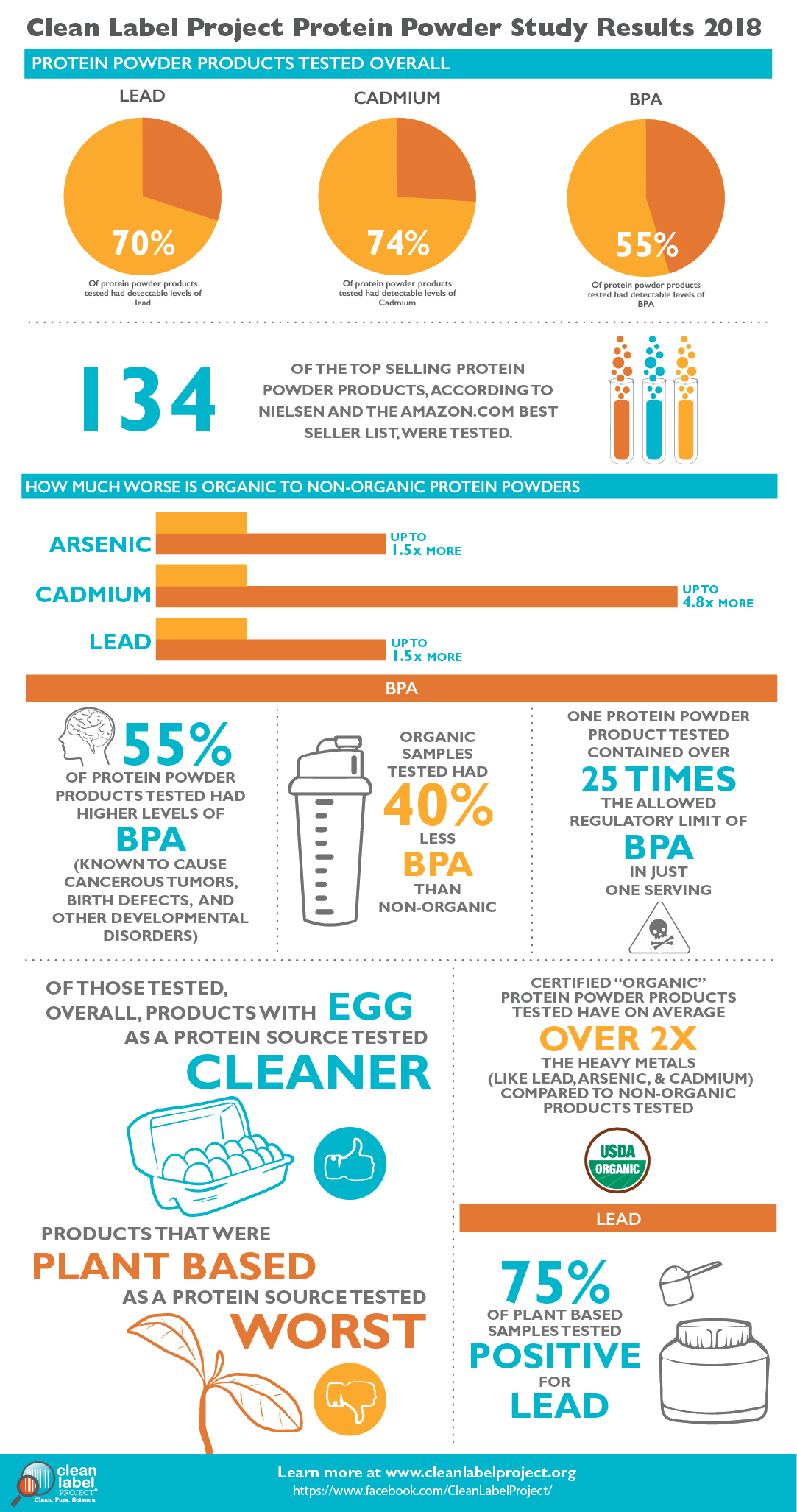
Protein Powder Study
The Clean Label Project™ completed a study of 134 protein powder products from 52 brands. Products were screened for over 130 toxins including heavy metals, BPA, pesticides, and other contaminants with links to cancer and other health conditions.
Resources & References
- Should you use protein powders? It’s complicated. > https://www.washingtonpost.com/lifestyle/wellness/should-you-use-protein-powders-its-complicated/2017/09/29/843d9d84-9e1c-11e7-8ea1-ed975285475e_story.html
- The Clean Label Project. > https://www.cleanlabelproject.org/protein-powder/
- Should You Have a Protein Shake Before or After Your Workout? > https://www.healthline.com/nutrition/protein-shake-before-or-after-workout#pre-vs-post-workout
- The hidden dangers of protein powders. > https://www.health.harvard.edu/staying-healthy/the-hidden-dangers-of-protein-powders


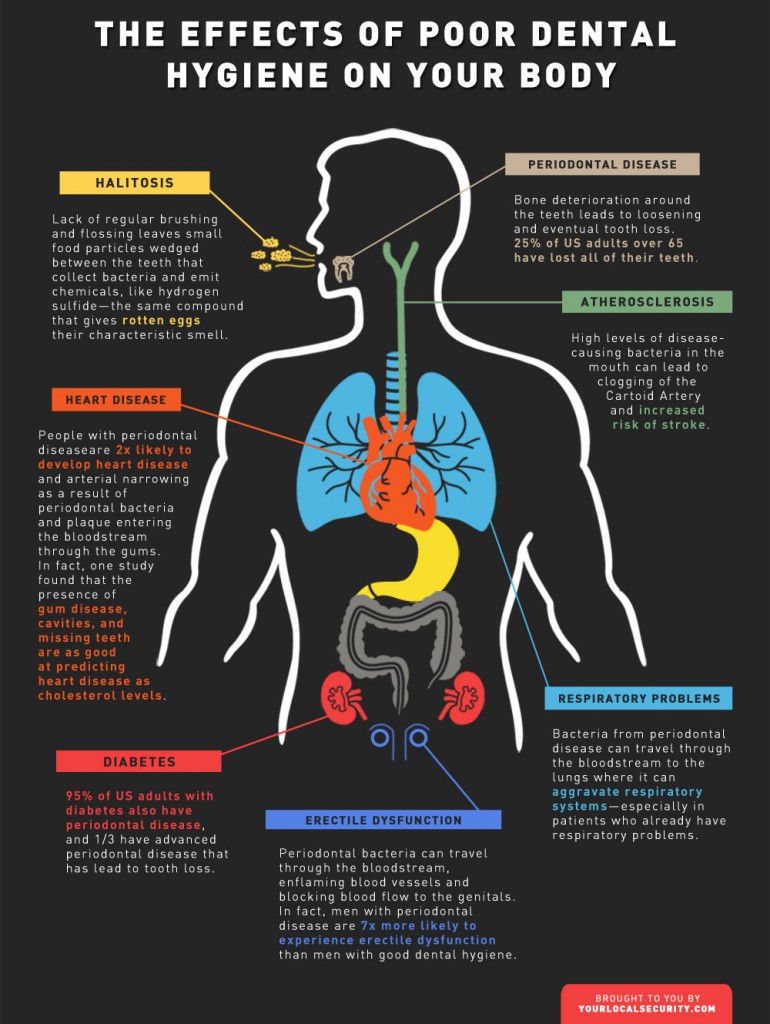
Put off the dentist and your smile isn’t the only thing that can suffer: Poor oral hygiene could hurt your heart health, suggests a new study from Finland.
After examining the teeth and the arteries of more than 500 people, the researchers discovered that those need of a root canal were nearly 3 times more likely to have acute coronary syndrome—a clogging of the heart’s arteries that can cause a heart attack—than patients with healthy teeth.
Bacteria from the tooth infection may spread to other parts of the body including the heart. What was not studied and possibly of greater import was the level of inflammation in the body as measured by inflammatory proteins in the blood. At higher levels, c-reactive proteins indicate a high level of inflammation which in turn is associated with many systemic diseases, not just heart disease. An unclean or infected mouth will raise the level of c-reactive proteins in the blood. It’s imperative to maintain your oral hygiene and keep up with your cleanings.
Resources & References
- Association of Endodontic Lesions with Coronary Artery Disease > https://journals.sagepub.com/doi/abs/10.1177/0022034516660509