Reference library exploring leadership & human performance

Category: Health & Vitality Page 7 of 10

Reaction FREE: The 12 Rules of Reaction

Reaction FREE

A Reaction is a term used to describe an adverse situation where we lose our composure, equanimity, or calmness in response to a situation or event that involves unwanted feelings hijacking us. These emotions can include intense feelings of pain, sadness, fear, anger, or indignation that manifest as a fixation on being “right”, can be either conscious or unconscious, and are accompanied by a physiological response that can be felt most intensely in our chest or stomach.

Reactions are usually instant, uncontrollable, and overwhelming to our rational response causing us to say or do things that are not well thought out, hurtful or harmful to others or ourselves. Typically the core emotion or package of emotions relates to unresolved issues from the past that the current situation or event has triggered.

Catharsis & Honesty

For some people, this video would be confronting. For others it is cathartic. A film by Mark Pellington – David Whyte essay – Music by Jeff Rona.

Mark Pellington’s words say it best:

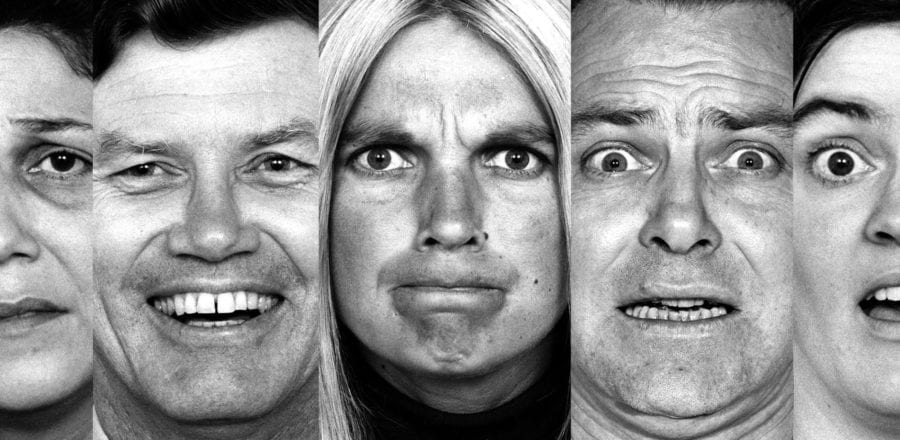
“This film was made by me as an exercise in process, to explore my own progress and personal feelings towards loss, grief, and healing. Via this text. My instinct was to be very simple and direct and to understand these words, via catharsis. The conduit was human, the face. The unlying veneer, the carrier of instinct. The face. It evokes the range of emotional expression and human truth of strangers. They all listened to it one time and brought their own inner stories to you the viewer. For you to feel your own. David’s Whyte words inspired this all. Kudos to the cast, Michael Sanford casting, Jeff Rona’s music and Matt Roe’s wonderful images.”

FREE WILL > Are We Actually Making Our Own Decisions?

Recent research into how we make decisions reveals some startling findings that a brain scan can predict what we will choose 6 seconds before we consciously make the decision. So does that mean we are making most of our decisions unconsciously? You decide…

Passion

PASSION (2)

In this article, you will discover what
PASSION looks and feels like!

When I am feeling passionate, I have a heightened sense of vitality, aliveness, vibrancy, drive and enthusiasm.  There is a warm excitement and an all-consuming focus on my sensations.  I have a sense of confidence, total concentration, and a keen awareness.

ZONE TIPS > Your Feelings Are Not Reliable

Feelings are important to our experience of living as human beings. It is said that all mammals have some feelings; however, as a human being, we have the widest range of feelings. Beyond the basic triad of pain, pleasure and numb, we have a lot of nuances to describe how we feel at any given moment — about everything we experience.

When it comes to making decisions, even the most rational, seemingly emotionless decision-makers are, unbeknownst to them, influenced by their feelings — even if they are not consciously aware of them. Even no feeling is a feeling.

Because of past things that have happened to us (both real and imagined) we tend to have conflicting emotions, as well as stacks of misplaced emotions, that get projected onto items, areas, subjects and people that they do not belong to.

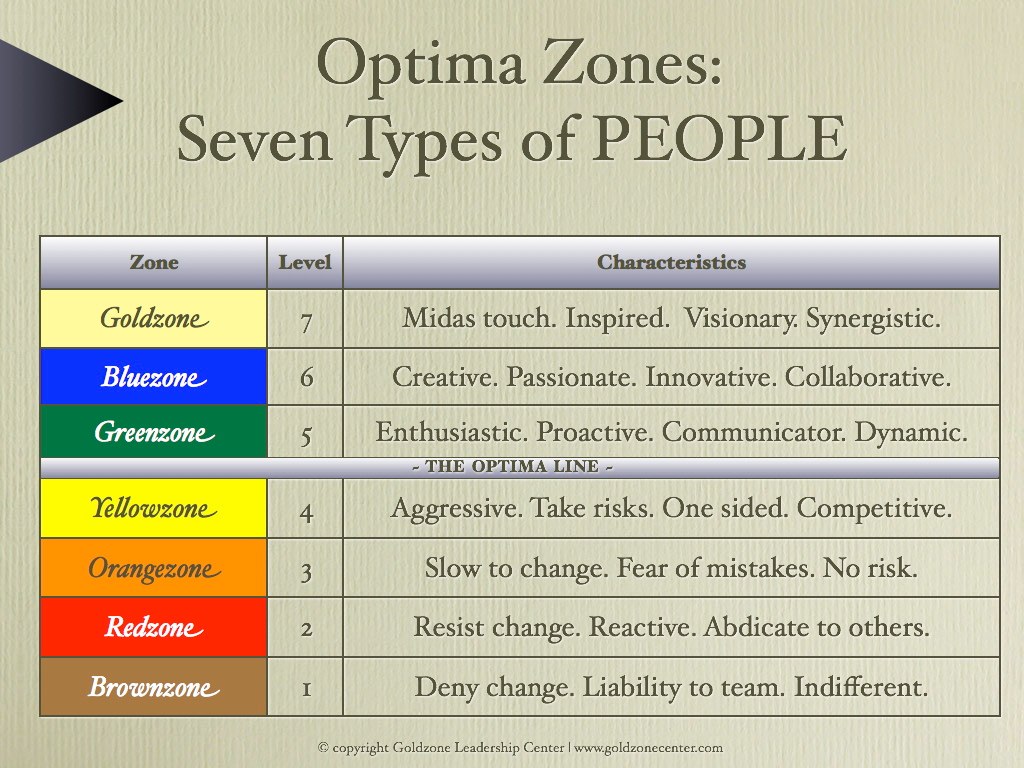
OPTIMA ZONES > Seven Types of People

Consider the chart below: Seven Types of People. As a general rule most people tend to spend most of their time in one primary zone or level. Yes, from day to day, week to week, a person can change and rise up and down this scale. In other words when a person changes for the better, they move up. The opposite is also true: when they change for the worse, they move down.

Understanding this chart and the other charts of the Optima Zones allows you to predict the results people will get from life, career, business and relationships. It also allows you to identify where you are at, so you can change what you need to change in order to improve your results.

<< click on the chart to enlarge >>

© Goldzone Education. All rights reserved.

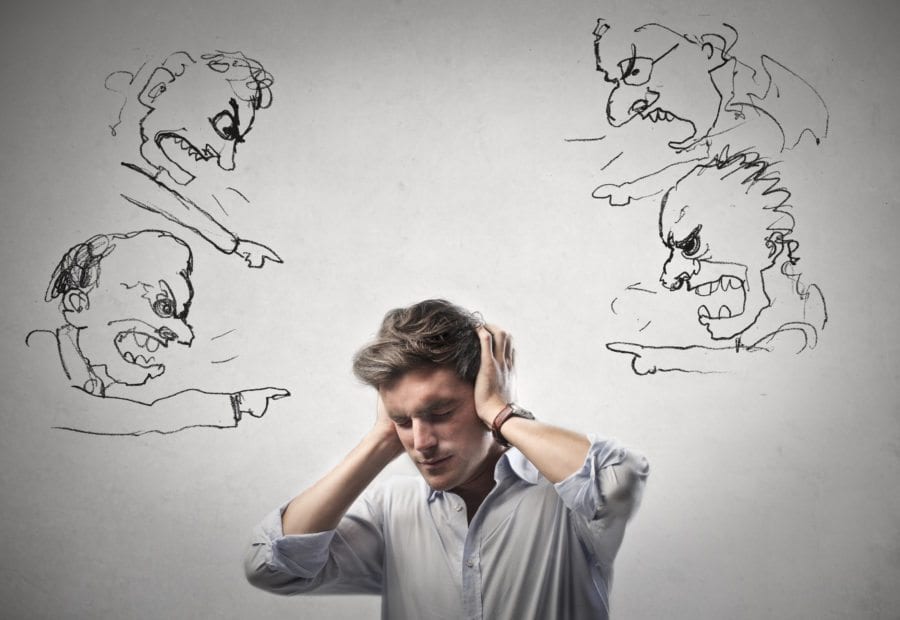
Your Inner-Critic

Have you ever made a mistake and felt the sting of dread, shame, and disapproval a split-second later, followed by a critical inner voice that judged and found fault with what you had done?

Both the feeling and the voice are manifestations of what is known as your “Inner Critic.” This article explores what is an Inner Critic, how it works, where it came from, and how to free oneself once and for all of this sabotaging mechanism.

Let’s explore the definition in more detail:

INNER:

  1. Situated inside, further in, or internal.
  2. Spiritual, mental, or emotional.
  3. Private and not expressed or discernible.

CRITIC:

  1. A person who disapproves and expresses their unfavorable view of something.
  2. A person who judges and evaluates or analyzes literary or artistic works, dramatic or musical performances.
  3. A person who tends too readily to make trivial, or harsh judgments; faultfinder.

INNER-CRITIC:

  1. Internal, private voice that disapproves, judges, evaluates, and finds fault saying that he or she is bad, wrong, inadequate, worthless, guilty, and not good enough.

If you are like most people, your feelings about criticism range from mild dislike to strong dislike to outright hatred of both the criticism and the person giving it.

The Impact of Shame and What to Do About It

The purpose of this article is to discuss the subject of shame, its impact on your life and outline steps to release the feeling of shame and the effects these feelings create.

First, let’s look at some definitions:

SHAME: A strong negative emotion that combines feelings of dishonor, unworthiness, and embarrassment.

GUILT: An awareness of having done wrong accompanied by feelings of shame and regret.

REGRET: To feel sorry and sad about something previously done or said that now appears wrong, mistaken, or hurtful to others.

Who Validates the Validator?

http://www.youtube.com/watch?v=Cbk980jV7Ao[youtube=http://www.youtube.com/watch?v=Cbk980jV7Ao]

What Are Emotions?

In this article, you will discover the language of
emotion, where they come from and why
emotion drives everything.

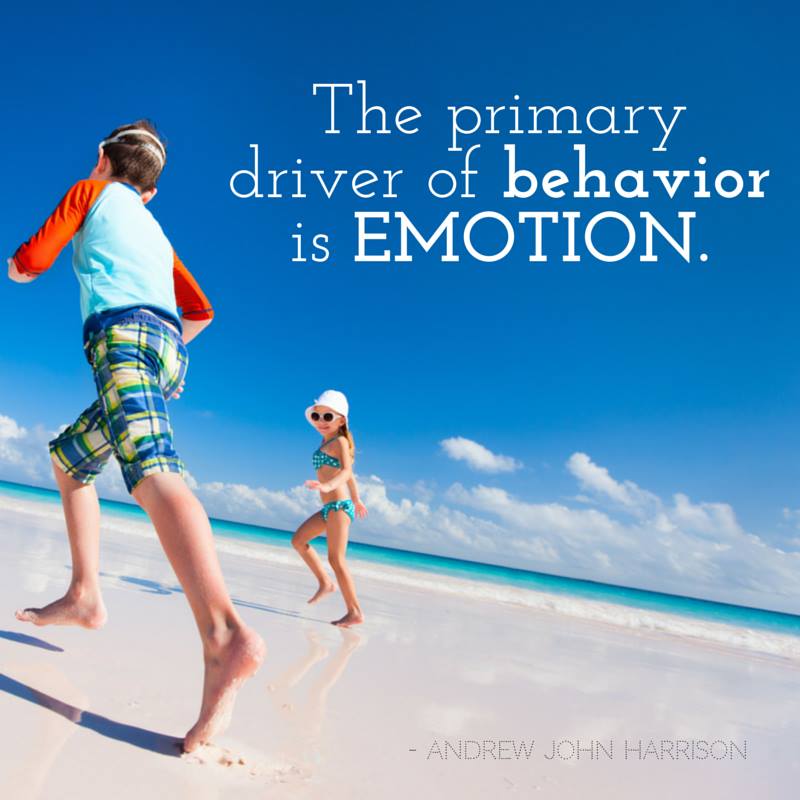
Love, anger, hate, fear. These are examples of emotions. Most people spend their time chasing emotions they want and avoiding emotions they don’t want. The trouble with living this way is that the emotions you are chasing seem to run away faster than you can catch them – and the emotions you are avoiding (or running from) seem to follow you wherever you go!

Page 7 of 10

Powered by WordPress & Theme by Anders Norén

0