Reference library exploring leadership & human performance

Category: Leadership & Influence Page 20 of 26

Towers of Glass, Feet of Clay: What Is the Quest?

I was going throughdubaipaster my travel photographs and saw this picture of a poster at the Dubai Airport advertising the world’s tallest building, which was under construction at the time. The Burj Dubai is very impressive and I was inspired to write more about the towers of glass.

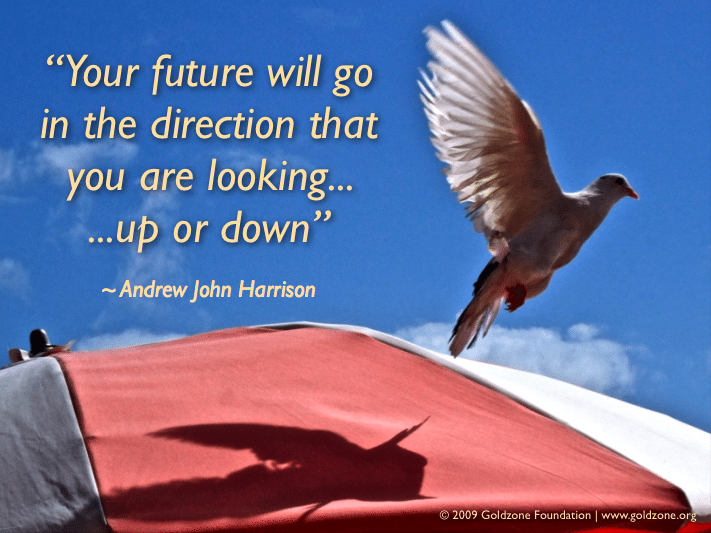
Your Flight Path

yourfuture

We Can Choose To Evolve

wavesofimpact

Dance Away Your Fears

anjoudance

Leadership Dynamics Poll

[polldaddy poll=1354219]

The Key Is Sincerity

“The key to a leader’s impact is sincerity. Before he can inspire with emotion he must be swayed by it himself. Before he can move their tears his own must flow. To convince them he must himself believe.”

– Winston Churchill

The Seven Leadership Saboteurs

There are a lot of things that can cause a leader to fail.  None of them are as deadly as what they do to themselves!  The following is a list of saboteurs that apply equally to leaders and followers:

  1. fear, doubt & disbelief
  2. criticism (and the inner-critic)
  3. anger (under-expressed & over-expressed)
  4. invalidating behavior & communication (most of us are so used to this, we don’t even notice it)
  5. triggers, reactions & moods (we all know people who react to small things and are moody)
  6. greed & jealousy (yikes)
  7. black holes, denial and the emotional roller coaster (no matter how much you give, it is never enough)

Who wants to follow a leader who is afraid, doubts the task at hand is possible and disbelieves the team’s ability to get the job done?  On the other hand, who wants to lead people like that?  The truth is no one in their right mind would “want to.” However, the reality is that as a leader, we end up having to lead people exactly like that!

The key is to learn how to succeed as a leader regardless of the quality or state of the people we are leading.

In future posts we will discuss in more detail how to handle difficult people…

You Gotta Have a Dream

“You gotta have a dream. If you don’t have a dream, then how you gonna have your dream come true?”

– Richard Rodgers and Oscar Hammerstein, “Happy Talk,” South Pacific, 1958.

What Motivates People To Lead?

There are eight primary motivations for leading:

  1. By default (no one else wants to lead)
  2. The desire to make a difference
  3. A belief that they are the best suited for the role
  4. Other’s belief that they are the best suited for the role
  5. The desire to control and have power over others
  6. Ego, status, power and prestige
  7. Greed
  8. Not wanting to follow others

You can see from this list that the best leader is a person who desires to make a difference and is the best suited for the role.  Best suited for the role means they have the right combination of experience, skills, attitudes, and abilities.

What happens when a person is motivated by the desire to control, enhance their ego, status, and power, etc.?

Their decisions, actions, and thought processes will be based on their own ego and what’s in it for them and not necessarily what is right for their stakeholders.

Who wants to follow a leader who is motivated primarily by self-interest?

The best leaders know when to lead and when to follow.  

If the leader is motivated by not wanting to follow, then they will insist on leading – even when they are clearly not the best suited for the situation.  The end result is an outcome that is less than what would be possible with the right person leading.

Next time you are choosing a leader, consider these eight motivations and don’t listen to what they say.  Consider their past actions as good indicators of future actions.

Creativity Killers

Many of today’s leaders are operating from an old leadership model that could be described as “leadership through domination.” This style stifles creativity and inhibits innovation.

It is impossible to think of new ideas that defy old ways of doing things if we are afraid of making mistakes and are constantly worried about the real or perceived threat from a leader whose style is based on autocracy, coercion and punishment.

Creative and innovative people require creative and innovative workplaces that are fluid, flexible, fun, nurturing, supportive and enjoyable.  No longer is economic success dependent on natural resources, manufacturing excellence, and scientific or technological prowess.  Today, the terms of success revolve around an organization’s ability to mobilize, attract and retain creative human talent.  Every competitive dimension depends on creativity and ingenuity of the people that make up the organization.

Leading a team of creative talent is very different from leading a factory line of workers who do similar tasks repetitively.  It simply does not work to command creativity!  Can you imagine Mozart or Picasso being told to produce or else, “You are out!”  Leadership in the creative economy requires vastly different skills.

Today’s new model of leadership involves partnership, cooperation and team.

Page 20 of 26

Powered by WordPress & Theme by Anders Norén

0